Turning days of tender preparation into a structured AI-assisted workflow.
A working tender intelligence system used by ACHV to turn company knowledge, historic tender documentation and current tender requirements into a structured preparation workflow.
- The problem
- Tender preparation meant rebuilding the same company knowledge, again, from old tenders, documents and people.
- What I did
- Designed and built the whole system: the workflow, the interface and the implementation.
- What was built
- A working system that structures company knowledge, historic tenders and a new tender's requirements into a preparation workflow.
- The result
- For ACHV, a tender preparation process that could previously take around three days can now be completed in roughly 30 minutes using TDi.
- My responsibility
- Product strategy, system design, AI workflow architecture, UX/UI, development and implementation.
- Status
- Operational. ACHV currently uses TDi for tender preparation.
Business context
Preparing a construction tender involves a lot of reading and a lot of reuse. Teams review tender documents, analyse historic tenders, retrieve company information, check requirements, gather subcontractor and supplier information, and produce documents that resemble ones they have written before.
The problem
The knowledge already exists, but it is fragmented across previous tenders, company documents, employees, supplier and subcontractor information, historical decisions and tender-specific files.
As a result, teams repeatedly reconstruct the same organisational knowledge for each new tender.
"Instead of rebuilding company knowledge every time a tender arrives, can that knowledge become reusable organisational intelligence?"
The system
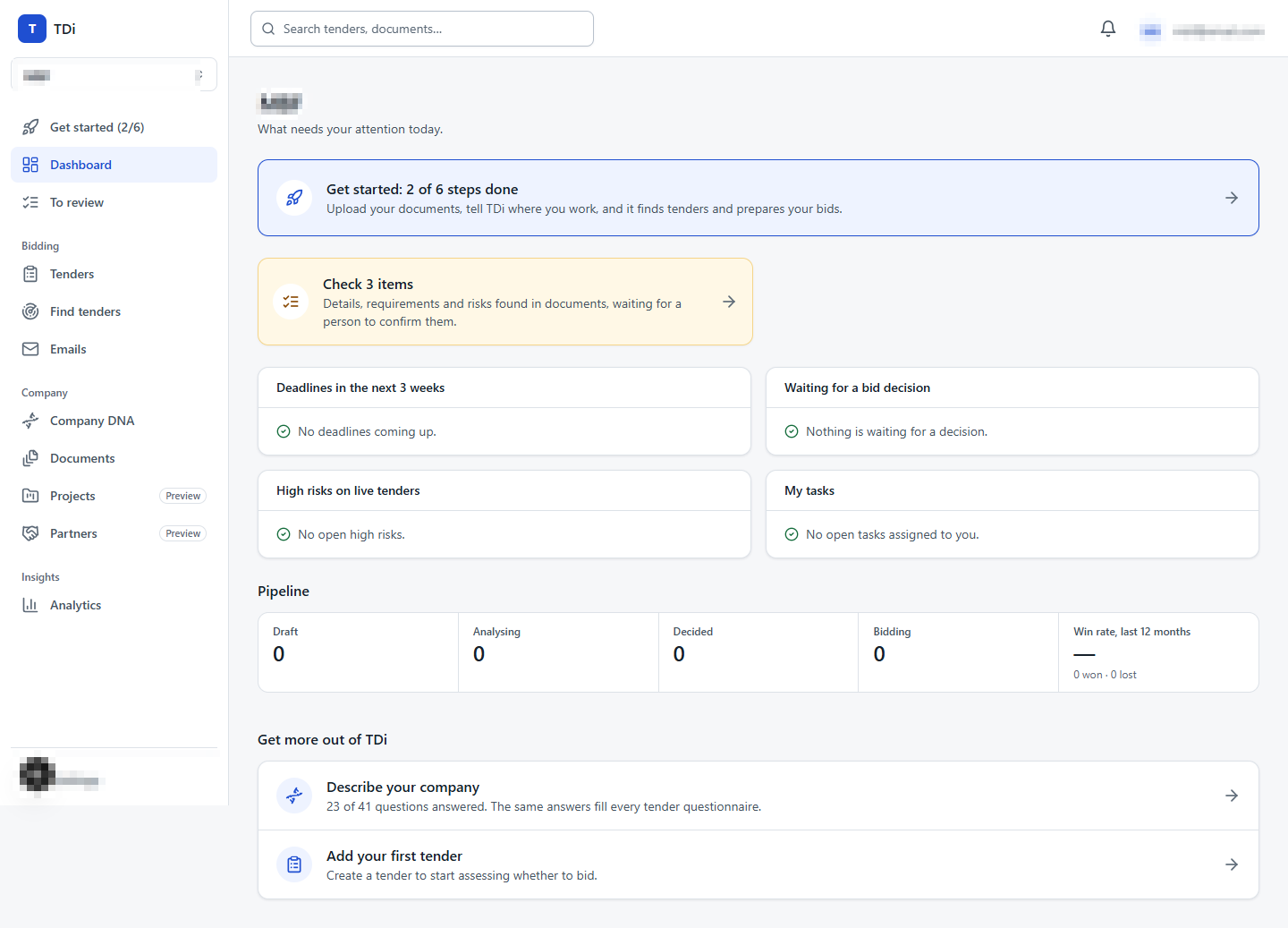
TDi takes what the company already knows, and what a new tender asks for, and turns both into a structured preparation workflow that a person then reviews.
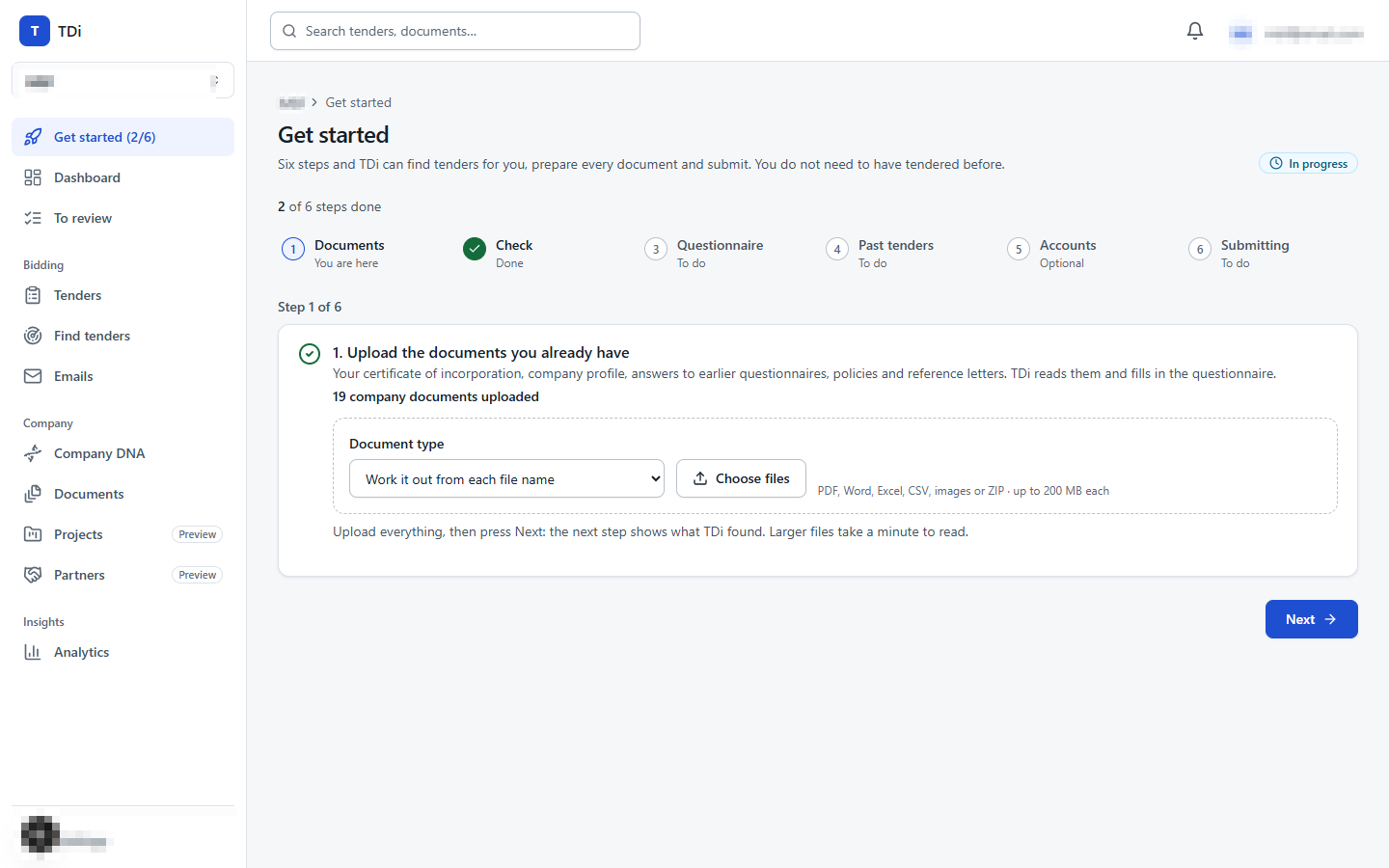
- Upload what the company already hasCertificates, company profile, answers to earlier questionnaires, policies and reference letters.
- TDi reads the documentsEach value is extracted together with the document, page and passage it came from.
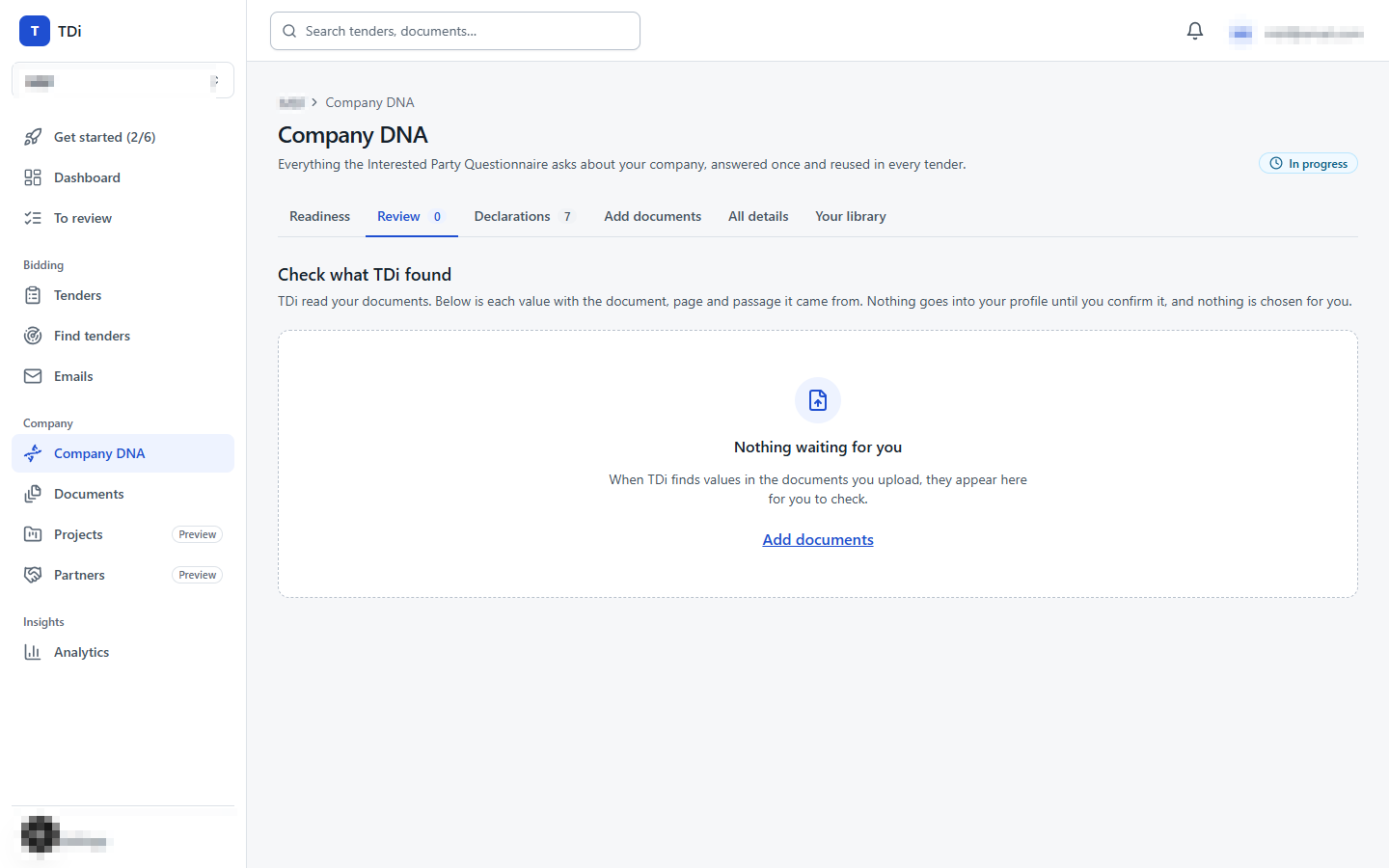
- A person checks what was foundNothing goes into the company profile until someone confirms it, and nothing is chosen for them.
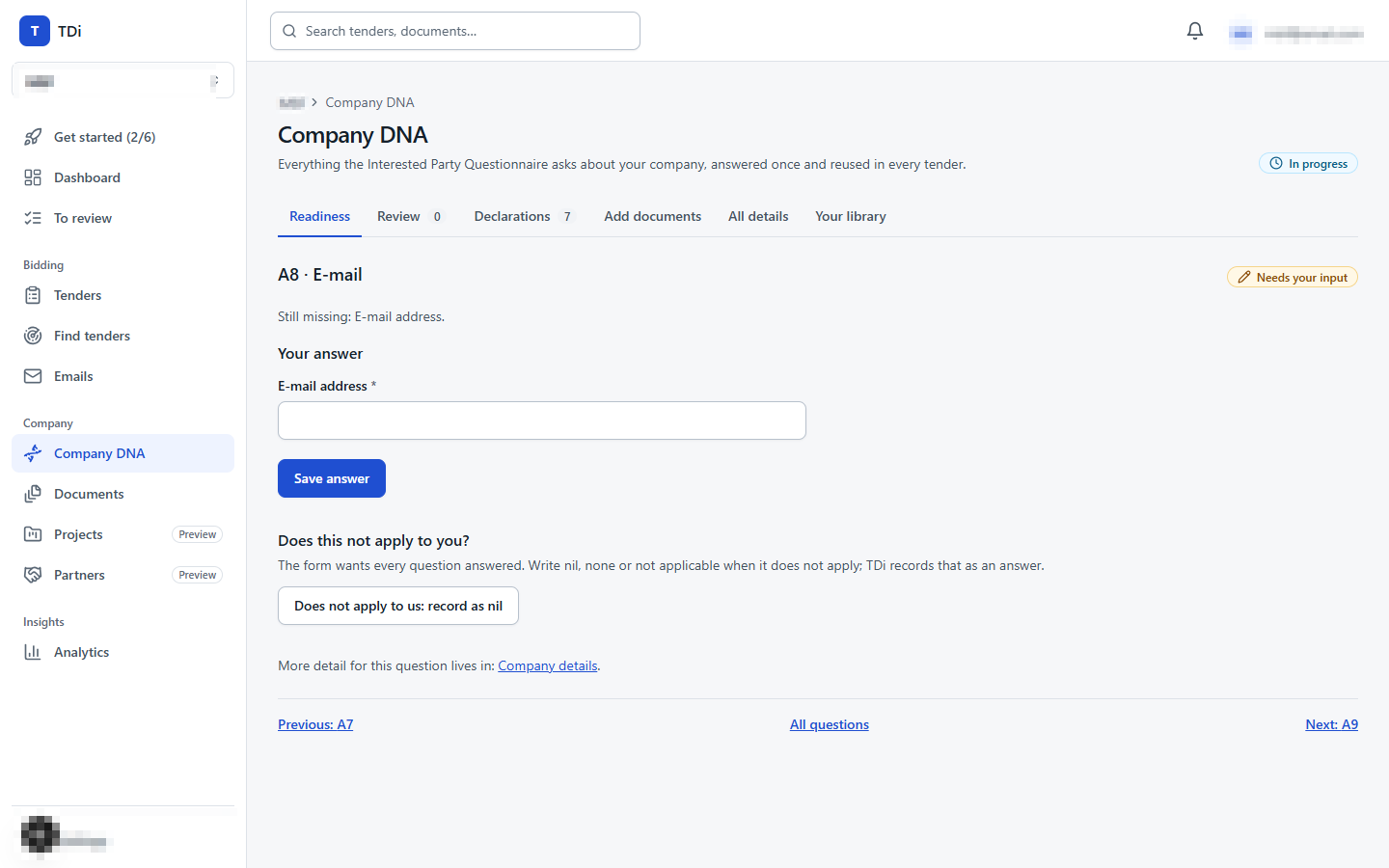
- Company DNAThe tender questionnaire is answered once and reused in every tender.
- Readiness for each tenderEvery question is marked answered, needs a document, needs input, or needs a declaration.
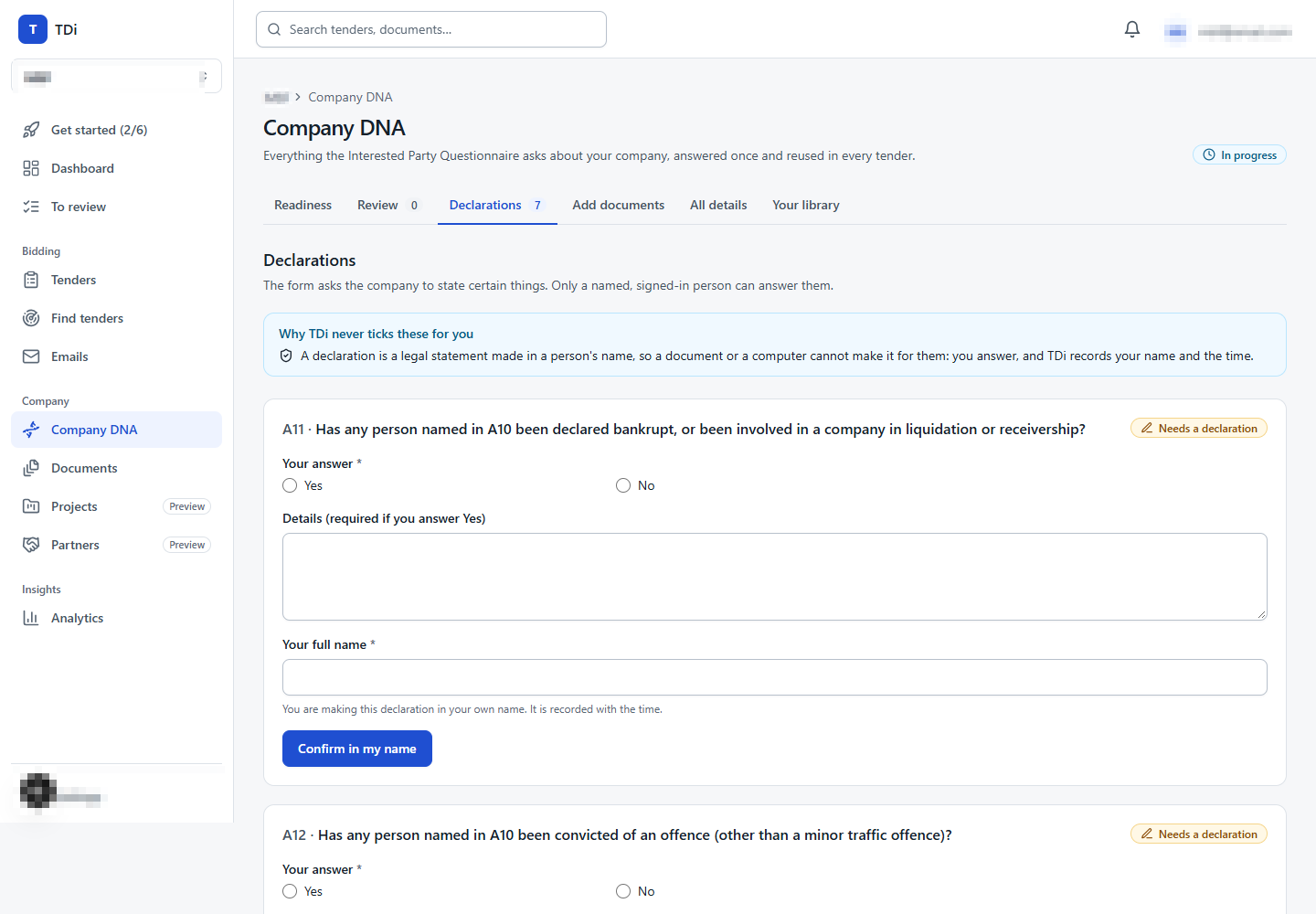
- Declarations by a named personLegal statements are answered only by a signed-in person, and their name and the time are recorded.
Simplified from the product's Get started, Check, Company DNA and Declarations steps. Implementation detail is deliberately left out.
Human oversight
TDi prepares the work. People decide what is used.
Extracted values stay unconfirmed until a person checks them against the source passage, and declarations, which are legal statements made in a person's name, are never filled in by the system.
That is a deliberate design position: where the output feeds a commercial bid, the useful question is not how much a person can be removed, but where their review adds the most.
Real-world usage
ACHV, a construction company, currently uses TDi in its tender preparation. It is a working system in operational use.
Result
~3 days→~30 min
Reported on ACHV's current tender workflow. Human review remains part of the process.
My role
I designed and built the entire system. That covers the product strategy, the system and workflow design, the AI workflow architecture, the UX/UI, the development and the implementation with ACHV.
Technical architecture
TDi is a client system, so the stack, prompts and security details stay private. I'm glad to walk through the architecture and the engineering decisions in a call.